Introduction
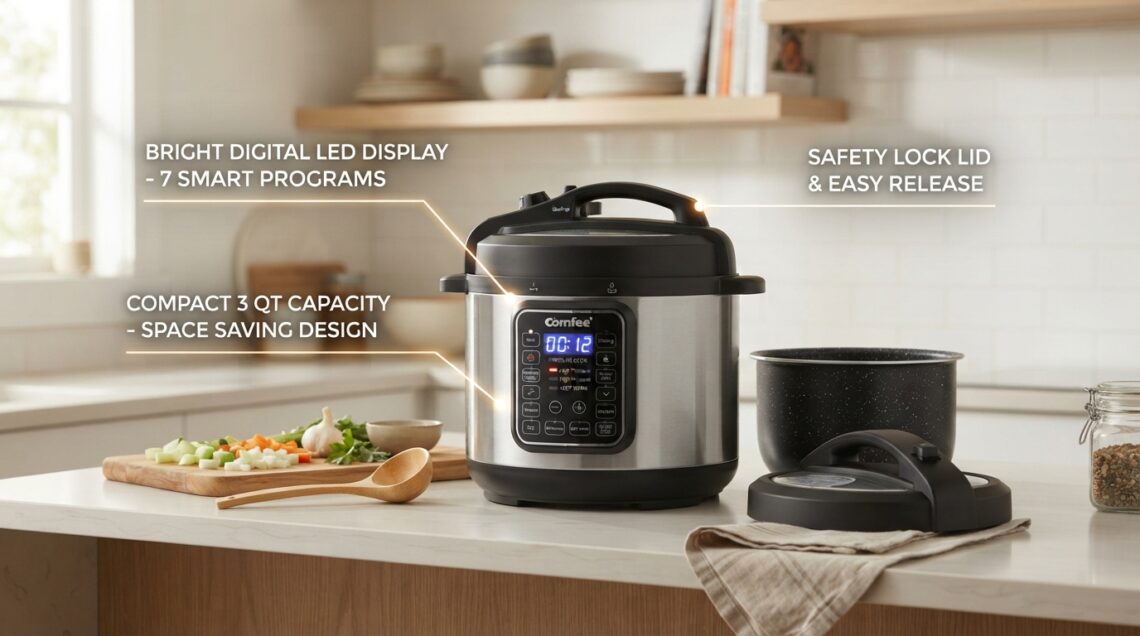
Not every household needs a large-capacity multi-cooker sitting on the counter. For singles, couples, or anyone cooking primarily for one or two people, a smaller-footprint appliance can often make more practical sense than a bulkier unit designed for family-sized batches. The COMFEE’ 7-in-1 Small Electric Pressure Cooker falls into this compact category, combining seven cooking functions — pressure cooking, slow cooking, steaming, sautéing, sous vide, warming, and general multi-cooking — into a 3-quart unit finished with a ceramic-coated non-stick pot.
This article walks through what this type of appliance generally offers, how each function tends to be used in everyday cooking, who it’s likely to suit best, and the practical considerations worth thinking about before adding one to a kitchen. The intent here is to inform rather than persuade, giving you enough detail to judge for yourself whether a compact multi-cooker like this fits your cooking habits.
Key Features
The COMFEE’ 7-in-1 brings together several distinct appliance functions in a single, smaller-scale unit, which is worth breaking down function by function.
Pressure Cooking As with larger multi-cookers, the pressure cooking function uses sealed, pressurized steam to cook food more quickly than open-pot methods. This is particularly useful for smaller portions of dried beans, grains, or proteins that would otherwise take considerably longer using conventional stovetop techniques.
Slow Cooking A slow cook setting is included for dishes that benefit from extended, low-temperature cooking, such as small-batch stews or braised dishes, without requiring a completely separate slow cooker appliance.
Steaming The steaming function allows vegetables, dumplings, or seafood to be cooked using pressurized steam rather than submersion in boiling water, which some cooks prefer for texture and nutrient retention in smaller portions.
Sautéing Before or after using other functions, the sauté setting can brown aromatics, sear proteins, or reduce a sauce directly in the same pot, reducing the number of separate pans needed for a single dish.
Sous Vide This is a somewhat less common inclusion on compact multi-cookers. The sous vide function maintains a very precise, consistent water temperature over an extended period, which is the technique typically used to cook proteins evenly from edge to edge, often finished afterward with a quick sear.
Warming Once cooking is complete, the warm setting holds food at a safe serving temperature without continuing to cook it, which can help with coordinating a meal’s timing.
General Multi-Cooking Beyond the six functions above, the unit is generally positioned as a flexible multi-cooker capable of handling a range of everyday recipes designed specifically for compact pressure cooking appliances.
The inner pot uses a ceramic-coated non-stick surface rather than uncoated stainless steel, which is a notable design choice compared to some larger multi-cookers, and the 3-quart capacity reflects a clear focus on smaller portions rather than large-batch cooking.
How It Can Be Used
Because of its smaller capacity and inclusion of sous vide alongside more familiar functions, this type of appliance tends to fit a slightly different set of use cases compared to larger multi-cookers.
Cooking for one or two people is arguably the most natural fit. A 3-quart capacity is generally well suited to individual portions or small couple-sized meals, without the excess capacity that can make larger units feel impractical for smaller households.
Quick weeknight meals benefit from the same faster cooking times associated with pressure cooking in general, allowing dishes like grains, legumes, or smaller cuts of meat to cook in less time than conventional stovetop methods would typically require.
Precision protein cooking becomes possible through the sous vide function, which some home cooks use for items like chicken breast, salmon, or steak when they want more consistent, edge-to-edge doneness than typical pan-searing or roasting tends to produce on its own. This is usually paired with a quick sear afterward, sometimes using the same appliance’s sauté function.
Small-batch steaming is useful for vegetables, dumplings, or similar dishes where a large steamer basket isn’t necessary and a compact appliance is more practical to set up and clean afterward.
Slow-cooked comfort meals in smaller portions, such as a modest batch of chili or a small pot roast, can be prepared using the slow cook function without the excess capacity of a full-sized slow cooker.
Simplified one-pot cooking is a common theme across many of these functions, since the ability to sauté, pressure cook, and warm within the same vessel reduces the number of dishes generated by a single recipe, which some users find particularly valuable in smaller kitchens with limited dishwashing space.
Who It May Be Suitable For
Given its size and function set, this appliance tends to appeal to a somewhat more specific range of households compared to larger multi-cookers.
Individuals living alone often find a 3-quart capacity better matched to their typical portion sizes than a larger 6- or 8-quart unit, which can feel oversized for single servings and take up more storage space than necessary.
Couples cooking primarily for two may also find this size practical for everyday meals, reserving larger gatherings for other cooking methods or appliances.
People interested in trying sous vide cooking without investing in a separate immersion circulator and container setup may appreciate having that function built directly into a multi-purpose appliance, particularly as an accessible starting point for experimenting with the technique.
Renters or those in smaller kitchens with limited counter and storage space may prefer a more compact footprint overall, since a smaller multi-cooker is generally easier to store in cabinets or on smaller counters than bulkier units.
Those who prefer non-stick cleanup may lean toward the ceramic-coated pot over uncoated stainless steel, since non-stick surfaces can sometimes be easier to wipe clean after certain dishes, though this comes with its own set of care considerations discussed below.
On the other hand, larger families, frequent batch cookers, or households that regularly prepare meals for four or more people may find the 3-quart capacity limiting for their typical cooking volume, and might be better served by a larger-capacity multi-cooker instead.
Important Things to Consider
A few practical points are worth thinking through before deciding whether this type of compact multi-cooker fits your needs.
Capacity limitations. A 3-quart pot is considerably smaller than the 6- to 8-quart range common among many multi-cookers, which is well suited to individual or small-couple portions but can quickly feel restrictive for larger households or batch cooking ambitions.
Ceramic non-stick coating care. Ceramic-coated pots generally require gentler handling than uncoated stainless steel, including avoiding metal utensils and abrasive scouring pads, and non-stick coatings in general can degrade over time with heavy use, which is worth factoring into long-term expectations for the appliance.
Learning the sous vide function. Sous vide cooking involves a different mindset than typical pressure or slow cooking, relying on precise temperature and time combinations specific to different proteins and desired doneness levels. New users may want to start with straightforward, well-documented recipes while becoming familiar with the technique.
Adjusting recipes for a smaller pot. Recipes written for larger multi-cookers will generally need to be scaled down, both in ingredient quantities and sometimes in liquid ratios, to work properly in a 3-quart unit, which may involve a bit of initial trial and error.
Storage and portability. While the compact size is an advantage for smaller kitchens, it’s still worth confirming the unit’s dimensions against your available storage space, particularly if you plan to store it in a cabinet between uses rather than leaving it on the counter permanently.
Function overlap with existing appliances. If your kitchen already includes a slow cooker, steamer, or sous vide setup, it’s worth considering how much added value a combined unit provides versus simply continuing to use what you already have, especially if counter space is limited and duplicate functions aren’t strictly necessary.
Comparison of General Categories
Rather than comparing this specific product to particular competing brands, it’s often more useful to compare general categories of cooking appliances to understand where a compact multi-cooker like this one fits.
Compact multi-cookers versus full-sized multi-cookers. Full-sized multi-cookers, often in the 6- to 8-quart range, are generally better suited to larger households, batch cooking, and meal prepping for the week ahead. Compact multi-cookers trade that larger capacity for a smaller footprint, which tends to suit individuals, couples, or those with limited kitchen space more effectively.
Multi-cookers with sous vide versus standalone sous vide circulators. A dedicated sous vide immersion circulator, paired with a separate container, generally offers more flexibility in terms of the volume of water and food that can be cooked at once, and is often favored by more dedicated sous vide enthusiasts. A built-in sous vide function within a smaller multi-cooker offers a more space-efficient, all-in-one alternative, which may appeal more to casual or occasional users than to those planning frequent, larger-batch sous vide sessions.
Ceramic non-stick pots versus uncoated stainless steel pots. Ceramic-coated non-stick surfaces are often easier to clean after certain sticky or delicate dishes and don’t require oil for basic sautéing in the same way uncoated surfaces might. Uncoated stainless steel, on the other hand, tends to be more durable over the long term and compatible with metal utensils and higher-heat searing without concerns about coating degradation. The right choice often comes down to a trade-off between easier day-to-day cleanup and longer-term surface durability.
Compact appliances versus multiple single-purpose small appliances. Some households prefer owning individual, smaller single-purpose appliances, such as a small rice cooker and a separate steamer, rather than consolidating functions into one device. This approach can offer more specialized performance for each individual task, while a combined compact multi-cooker generally prioritizes space efficiency and simplicity over specialized optimization for any single function.
Frequently Asked Questions
Is a 3-quart capacity enough for a family meal? Generally, a 3-quart capacity is better suited to individual portions or meals for two, rather than larger family-sized batches. Households cooking for three or more people regularly may find a larger-capacity multi-cooker more practical.
How does sous vide cooking differ from regular pressure or slow cooking? Sous vide relies on maintaining a very precise, consistent water temperature over an extended period to cook food evenly throughout, typically sealed in a bag, whereas pressure and slow cooking involve direct heat and pressure or extended low-temperature cooking without the same emphasis on exact temperature precision.
Can the ceramic-coated pot be used with metal utensils? Ceramic non-stick coatings are generally more prone to scratching from metal utensils compared to uncoated stainless steel, so using silicone, wood, or other non-metal utensils is typically recommended to help preserve the coating over time.
Does this type of appliance need any special accessories for sous vide cooking? Sous vide cooking often benefits from accessories such as vacuum-sealed bags or specific sous vide-safe bags, along with a way to remove excess air, though specific accessory needs can vary depending on the recipe and technique being used.
Is a smaller multi-cooker easier to clean than a larger one? In general, a smaller pot and unit can be somewhat quicker to clean simply due to reduced surface area, though actual cleaning ease also depends heavily on what was cooked and how well the ceramic coating is maintained over time.
Can recipes designed for larger multi-cookers be adapted for a 3-quart model? Many recipes can be scaled down for a smaller unit, though this typically requires adjusting ingredient quantities and sometimes liquid ratios, since cooking times and pressure buildup can behave somewhat differently in a smaller vessel.
Does the non-stick coating wear out over time? Like most non-stick coatings, ceramic coatings can gradually degrade with heavy use, high heat, or abrasive cleaning methods, which is a normal characteristic of this type of cookware rather than a defect, though proper care can help extend its usable lifespan.
Conclusion
The COMFEE’ 7-in-1 Small Electric Pressure Cooker represents a more compact take on the multi-cooker category, aimed less at large-batch cooking and more at individuals, couples, or smaller households looking to combine several cooking functions, including the less commonly included sous vide option, into a single, space-conscious appliance. Its smaller 3-quart capacity and ceramic non-stick pot set it apart from larger stainless steel multi-cookers, each choice carrying its own trade-offs between capacity, cleanup, and long-term durability.
Whether this type of appliance makes sense for your kitchen ultimately depends on your typical portion sizes, available storage space, and interest in techniques like sous vide alongside more familiar pressure and slow cooking functions. Weighing these practical factors against your own cooking habits is generally the most useful way to determine whether a compact multi-cooker like this fits into your everyday routine.