Introduction
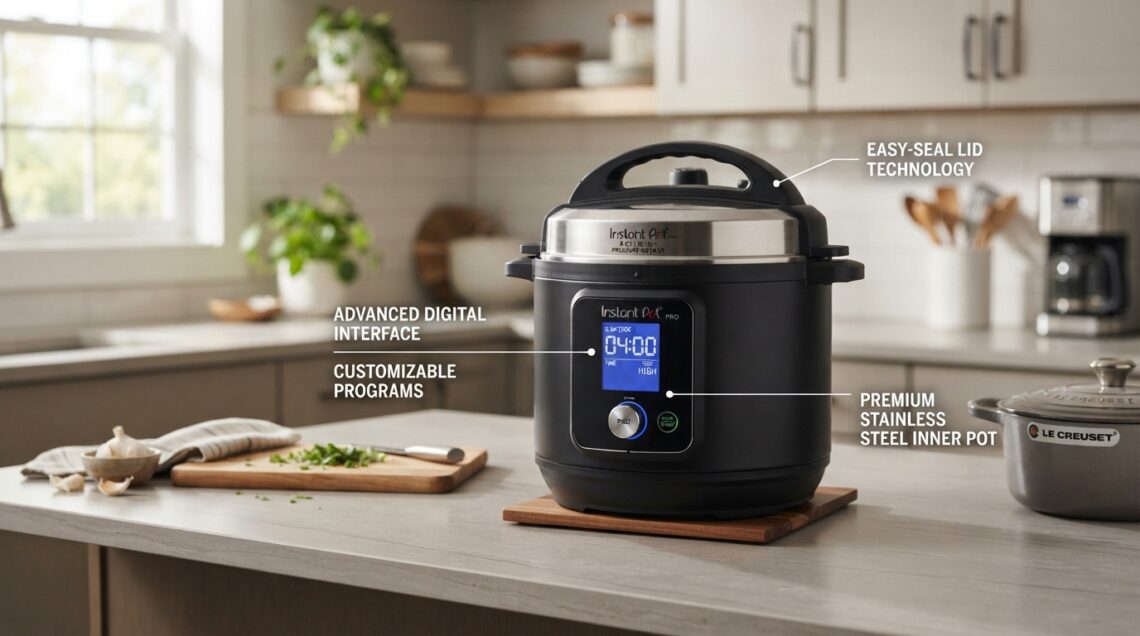
As multi-cookers have grown more popular, manufacturers have gradually added more functions to a single appliance, aiming to replace an even wider range of dedicated kitchen tools. The Instant Pot Pro 10-in-1 sits toward the higher end of this trend, combining ten cooking functions — pressure cooking, slow cooking, rice and grain cooking, steaming, sautéing, sous vide, yogurt making, sterilizing, and warming, along with general multi-cooking versatility — into a single 6-quart unit, supported by a companion app offering access to a large recipe library.
This article looks at what each of these functions typically involves, how they tend to be used in day-to-day cooking, the kinds of households that might get the most value from a device like this, and the practical considerations worth weighing before deciding whether it fits your kitchen. As with any appliance purchase, the goal here is to provide clear, balanced information rather than a sales pitch, so you can evaluate it on your own terms.
Key Features
With ten distinct functions built into one unit, it’s worth walking through what each one generally offers.
Pressure Cooking The foundational function of the appliance, pressure cooking uses sealed, pressurized steam to cook food considerably faster than open-pot methods, which is especially useful for ingredients that traditionally take a long time to become tender, such as dried beans, tougher cuts of meat, or whole grains.
Slow Cooking A slow cook setting allows for the same low-temperature, extended cooking style associated with traditional slow cookers, suited to dishes like braises, stews, and simmered sauces that benefit from gradual cooking over several hours.
Rice and Grain Cooking A dedicated setting is designed specifically for cooking rice and other grains with more consistent results than manually monitoring a pot on the stove, which can be useful for households that regularly prepare rice-based meals.
Steaming Using pressurized steam, this function is generally suited to vegetables, seafood, and other delicate foods, often producing different texture results compared to boiling since the food isn’t fully submerged in water.
Sautéing The sauté function allows browning, searing, and reducing to happen directly in the same pot used for other cooking steps, which can reduce the number of separate pans required for a single recipe.
Sous Vide This function maintains a very precise, consistent water temperature over an extended period, the technique typically used to cook proteins evenly from edge to edge, often finished with a quick sear afterward using the sauté function or a separate pan.
Yogurt Making A dedicated yogurt setting holds a consistent low temperature for the extended period needed for milk to properly ferment into yogurt, offering more control over ingredients and consistency than many store-bought options.
Sterilizing A sterilize function is included, generally used for sanitizing items like baby bottles, canning jars, or other kitchen equipment using high heat, which is a less common inclusion among multi-cookers overall.
Warming Once cooking is finished, the warm setting maintains a safe serving temperature without continuing to cook the food further, which is useful for coordinating timing across multiple dishes.
General Multi-Cooking Versatility Beyond these nine specific functions, the appliance is generally positioned as a broadly flexible tool capable of handling a wide range of recipes designed for multi-function pressure cookers.
The 6-quart stainless steel inner pot sits between the smaller and larger ends of the typical multi-cooker capacity range, and the companion app’s recipe library is intended to help both new and experienced users navigate the various functions with structured guidance.
How It Can Be Used
Given the breadth of functions included, this type of appliance tends to be used across a fairly wide range of cooking scenarios.
Everyday meal preparation benefits from the significantly reduced cooking times associated with pressure cooking, which can make dishes like risottos, braised meats, or bean-based recipes more realistic for a typical weeknight schedule.
Meal prepping for the week is supported by the 6-quart capacity, which is generally large enough for small to medium-sized households to prepare grains, proteins, or stews in batches, then portion them out over several days.
Precision protein cooking becomes accessible through the built-in sous vide function, often used for items like chicken, fish, or steak when a more even, controlled level of doneness is desired throughout the cut, generally finished with a quick sear for texture.
Homemade yogurt production is a practical use case for households that consume yogurt regularly and want more control over thickness, sweetness, and ingredients than pre-packaged options typically allow.
Rice and grain-based meals can be prepared using the dedicated rice and grain setting, which some users find more consistent than manually adjusting stovetop heat and timing.
Sanitizing baby items or canning equipment using the sterilize function is a more specialized but genuinely practical use case for parents or those who do home canning, offering an alternative to boiling water sterilization methods on the stovetop.
Multi-step, one-pot recipes are perhaps where the combination of functions is most evident in practice — searing meat with the sauté function, pressure cooking it with liquid and aromatics, and finishing with a reduction or additional sauté step, all within the same pot, which can meaningfully reduce cleanup compared to using several separate appliances or pans.
Who It May Be Suitable For
The wide function range and mid-sized capacity of this appliance tend to appeal to a fairly broad set of households, though certain situations make it particularly relevant.
Households that want to consolidate several appliances into one, including a pressure cooker, slow cooker, rice cooker, yogurt maker, and sterilizer, may find this a practical way to reduce the number of separate devices taking up kitchen space.
Parents with young children may specifically value the sterilize function for bottles and feeding equipment, in addition to the general cooking functions used for everyday family meals.
People interested in exploring sous vide cooking without purchasing a separate immersion circulator setup may appreciate having that function integrated into a broader multi-cooker, particularly as a way to experiment with the technique without additional equipment.
Small to medium-sized households or those who batch cook moderately may find the 6-quart capacity well matched to their needs, offering more flexibility than a smaller unit while remaining more manageable in size and storage than some larger 8-quart models.
Home canners may find the sterilize function relevant for preparing jars, though it’s worth confirming the appliance’s specific capabilities align with safe canning practices for your particular recipes and local guidelines.
On the other hand, individuals or couples who cook primarily small portions and have no interest in functions like sous vide or sterilizing may find a simpler, less feature-dense appliance more appropriate, since a portion of this unit’s functionality may go largely unused in that context.
Important Things to Consider
There are several practical points worth thinking through before adding an appliance with this many functions to your kitchen.
Feature overlap with existing appliances. With ten functions built in, it’s worth considering how many of them you’d realistically use versus appliances you may already own, such as a separate rice cooker or slow cooker, to determine how much added value the consolidation genuinely offers for your specific situation.
Learning curve across multiple functions. While each individual function is generally designed to be approachable, becoming comfortable with the full range, particularly less common inclusions like sous vide and sterilizing, may take more time than a simpler, single- or dual-function appliance would require.
Capacity considerations. A 6-quart pot sits in a middle range, generally suitable for small to medium households, but may feel limiting for larger families doing significant batch cooking, or unnecessarily large for someone cooking primarily individual portions.
Cleaning and maintenance. The stainless steel inner pot and sealing components require regular cleaning, and sealing rings in particular can retain odors over time from strongly flavored dishes unless cleaned thoroughly and, in some cases, replaced periodically.
Recipe adjustment. As with most pressure cookers, conventional stovetop or oven recipes often need adjustments to liquid quantities and cook times to work properly within a sealed, pressurized cooking environment, which may involve some initial trial and error or reliance on recipes specifically written for pressure cooking.
Sous vide accessory needs. Getting the most out of the sous vide function may involve additional accessories, such as vacuum-sealed bags, which is worth factoring in if this is a function you specifically plan to use regularly.
Reliance on the companion app. While the app’s recipe library can be a helpful resource, particularly for less familiar functions, it’s worth considering how much you expect to depend on it versus using the physical control panel and your own recipe sources over time.
Comparison of General Categories
Instead of comparing this specific appliance to particular competing brands, it’s often more useful to look at broader categories of cooking appliances to understand where a higher-function multi-cooker like this one fits.
Higher-function multi-cookers versus simpler multi-cookers. Appliances with fewer built-in functions, such as basic 5- or 7-in-1 models, are generally easier to learn and operate, and may suit households that only plan to use a smaller subset of functions regularly. Higher-function models like this one offer greater versatility for households that want to consolidate more appliances, but come with a steeper learning curve across the full feature set.
Built-in sous vide versus standalone immersion circulators. A dedicated sous vide immersion circulator paired with its own container generally offers more flexibility in terms of water volume and batch size, and is often favored by more frequent or dedicated sous vide users. A built-in sous vide function within a multi-cooker offers a more space-efficient, all-in-one alternative, which may suit occasional users better than those planning frequent, larger-scale sous vide sessions.
Multi-cookers with sterilizing functions versus stovetop sterilization methods. Boiling water on the stovetop is a long-established method for sterilizing bottles or jars and requires no additional appliance, though it does require active monitoring. A built-in sterilize function offers a more hands-off, consolidated alternative, which some users find more convenient, particularly if they’re already using the same appliance for other cooking tasks.
Mid-sized capacity versus larger or smaller multi-cookers. Larger-capacity multi-cookers, often 8 quarts or more, are generally better suited to bigger households or heavier batch cooking, while smaller 3-quart models are more suited to individuals or couples. A 6-quart capacity tends to sit in a practical middle ground for small to medium households, though it’s worth confirming this aligns with your typical cooking volume before choosing between capacity options.
Frequently Asked Questions
Is a 6-quart capacity suitable for a family of four? Generally, a 6-quart capacity can accommodate meals for a small to medium-sized family, though very large households or those who batch cook extensively may find a larger 8-quart model more practical for their typical cooking volume.
What is the difference between the sterilize function and simply boiling items on the stove? Both methods use high heat to sanitize items like bottles or jars, but a built-in sterilize function offers a more consolidated, generally hands-off process within the same appliance already used for cooking, whereas stovetop boiling requires separate equipment and more active monitoring.
Do I need special bags or equipment to use the sous vide function? Sous vide cooking typically involves sealing food in a vacuum-sealed or specifically designed sous vide bag before submerging it in the temperature-controlled water, so additional accessories are often needed to make full use of this function.
Can this type of appliance replace a dedicated slow cooker entirely? For many households, yes, since a slow cook function is built directly into the unit. Some users still prefer a separate dedicated slow cooker for very long, unattended cooking sessions, depending on personal preference.
How long does it typically take to make yogurt using the yogurt function? Yogurt-making generally involves an extended fermentation period, often several hours, during which the appliance maintains a consistent low temperature, followed by a chilling period before the yogurt is ready to eat.
Are recipes from the companion app necessary to use the appliance effectively? The app’s recipes can serve as a helpful starting point, particularly for functions that are less familiar, such as sous vide or sterilizing, though many users also adapt recipes from other sources or their own experience over time.
Does having more functions make the appliance more difficult to clean? Cleaning generally centers on the inner pot, lid, and sealing ring regardless of how many functions the appliance includes, so the number of functions itself doesn’t necessarily add significant cleaning complexity, though thorough cleaning remains important for food safety and odor prevention.
Conclusion
The Instant Pot Pro 10-in-1 reflects a broader trend toward consolidating an increasing number of kitchen appliance functions into a single unit, extending beyond the more common pressure cook, slow cook, and steam functions to include less typical additions like sous vide and sterilizing. Whether this level of functionality makes sense for your kitchen depends largely on how many of these ten functions you’d realistically use on a regular basis, how comfortable you are learning a broader feature set, and whether the 6-quart capacity aligns with your typical household cooking volume.
For households looking to meaningfully reduce the number of separate appliances they own while gaining access to more specialized cooking techniques like sous vide, this type of multi-cooker can offer real practical value. For those who only need a narrower set of functions, a simpler appliance might be a more straightforward fit. Weighing your actual cooking habits against the full range of features here is generally the most useful way to decide if it belongs in your kitchen.