Introduction
Pressure cooking has quietly made a comeback in home kitchens over the past decade, driven largely by a renewed interest in faster meal preparation, energy efficiency, and the kind of deep, slow-cooked flavor that used to require hours on the stovetop. Among the many stovetop pressure cookers available today, the Presto 01362 6-Quart Stainless Steel Pressure Cooker has become a familiar name for people looking for a straightforward, no-frills appliance that gets the job done without unnecessary complexity.
This article takes a closer look at what this particular model offers, how it fits into a modern kitchen, and what shoppers should think about before adding one to their cookware collection. Rather than focusing on marketing language, the goal here is to walk through the practical details: the construction, the design choices, the cooking possibilities, and the kind of household that tends to get the most out of a stovetop pressure cooker like this one.
Whether you’re new to pressure cooking altogether or you’re replacing an older unit that has finally worn out, understanding the mechanics and reasoning behind a product like this can help you decide whether it aligns with how you actually cook.
What Is the Presto 01362 6-Quart Stainless Steel Pressure Cooker?
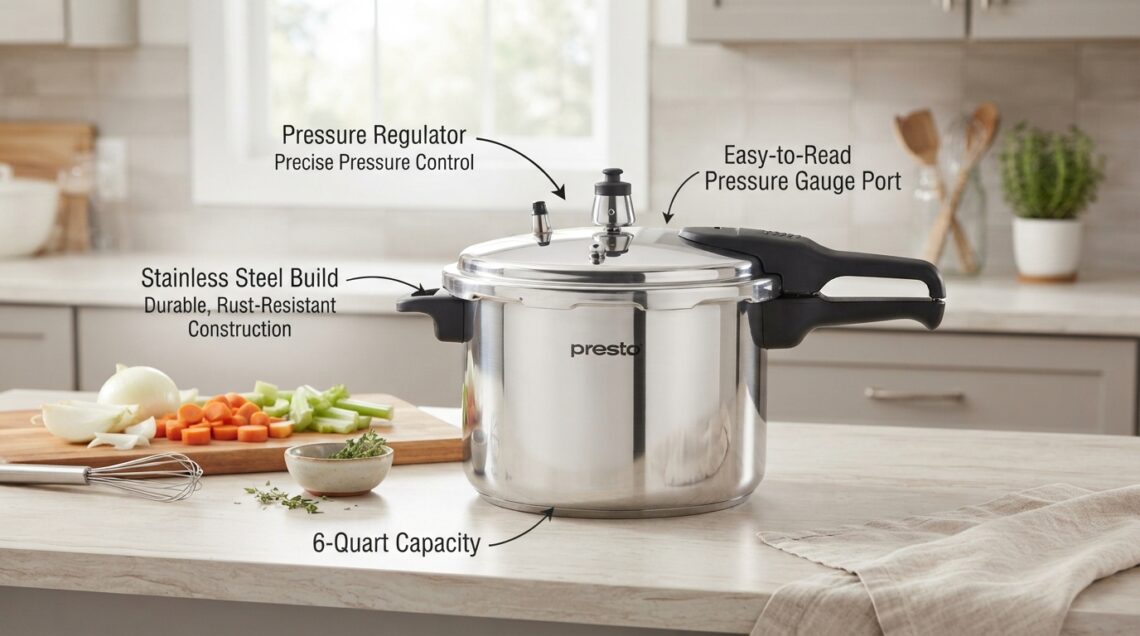
At its core, this is a stovetop pressure cooker made from stainless steel, designed to hold six quarts of food or liquid. Unlike electric multi-cookers that plug into the wall and manage pressure electronically, this is a manual, stovetop-based unit. It relies on direct heat from a gas or electric burner, along with a locking lid and pressure regulation mechanism, to build and maintain internal pressure.
Stovetop pressure cookers of this type have been around in various forms for decades, and Presto is one of the more established manufacturers in this category in the United States. The 01362 model represents a fairly standard, mid-sized version of this style of cooker, positioned for everyday home use rather than large-batch or commercial cooking.
Key Features
Stainless Steel Construction
The body of the cooker is made from stainless steel, which is a material widely valued in cookware for a few practical reasons. It doesn’t react with acidic foods the way some other metals can, it tends to hold up well over years of regular use, and it’s generally straightforward to clean. Stainless steel also handles high heat without warping easily, which matters given that pressure cooking involves sustained exposure to heat over the cooking cycle.
6-Quart Capacity
The six-quart size sits in a middle ground that many households find workable. It’s large enough to prepare a pot of soup, a batch of beans, or a modest cut of meat with vegetables, but it’s not so large that it becomes unwieldy on a standard stovetop or difficult to store in a typical kitchen cabinet. For single people or couples, six quarts often provides enough room for a full meal plus leftovers, while smaller families may find it suitable for regular weeknight cooking.
Pressure Regulator Design
This cooker uses a weighted pressure regulator, sometimes called a jiggle valve, which sits on top of the vent pipe. As steam builds inside the pot, it escapes through this regulator, producing the characteristic rocking or jiggling motion and sound associated with older-style pressure cookers. This mechanism is simple by design, with fewer electronic parts that could potentially malfunction, which is part of the appeal for people who prefer mechanical simplicity over digital controls.
Locking Lid System
Safety in pressure cooking depends heavily on the lid staying securely closed while pressure is building and while the pot is actively cooking. The 01362 includes a lid that locks into place, helping prevent it from being opened accidentally while there is still pressure inside. Understanding how this locking mechanism works is an important part of using any stovetop pressure cooker safely.
Compatibility with Multiple Heat Sources
Because it is a stovetop model rather than an electric one, this cooker can generally be used on gas, electric, and in many cases other conventional stovetop surfaces, offering flexibility for households that may have switched between different kitchen setups over the years or that want a cooker that isn’t tied to a specific power outlet or electrical system.
Straightforward, Low-Tech Operation
There are no digital displays, preset buttons, or programmable settings involved. The entire cooking process is regulated through stovetop heat control and the pressure regulator itself. For some users, this simplicity is a selling point, since it means fewer components that could require troubleshooting and a more direct, hands-on connection to the cooking process.
How It Can Be Used
A 6-quart stovetop pressure cooker like this one tends to be versatile in the kitchen, and its usefulness often comes down to how comfortable the cook becomes with pressure cooking techniques over time.
Beans and Legumes One of the most common uses for a pressure cooker of this type is cooking dried beans, lentils, and chickpeas from scratch. Pressure cooking can significantly cut down the time it takes to soften dried legumes compared to simmering them on the stove without pressure, which appeals to people who prefer cooking from dried ingredients rather than relying on canned versions.
Soups, Stocks, and Broths Because pressure cooking traps steam and heat inside a sealed environment, it’s often used to extract flavor from bones, vegetables, and aromatics more efficiently than open-pot simmering. Many home cooks use pressure cookers specifically for building rich stocks and broths in a shorter window of time.
Tougher Cuts of Meat Cuts of meat that typically require long, slow cooking to become tender, such as chuck roast, short ribs, or brisket, can often be cooked more quickly under pressure while still achieving a tender result. This is one of the more commonly cited practical benefits of pressure cooking in general.
Grains Rice, farro, barley, and other grains can also be prepared using a pressure cooker, although getting the timing and liquid ratios right often takes a bit of practice and reference to a reliable recipe or cooking chart.
Batch Cooking and Meal Prep Because of its six-quart capacity, this cooker can be useful for people who like to prepare larger batches of food at once, whether that’s a big pot of chili, a large batch of soup to portion out for the week, or bulk-cooked grains and legumes for meal prepping.
Canning-Adjacent Uses (With Caution) Some stovetop pressure cookers are used in home food preservation, though it’s worth noting that pressure cooking and pressure canning are not always the same thing, and not every pressure cooker is rated or designed for safe canning procedures. Anyone interested in using this cooker for canning purposes should refer directly to the manufacturer’s guidance and established food safety resources before proceeding, since improper canning practices can pose real health risks.
Who It May Be Suitable For
This type of stovetop pressure cooker tends to appeal to a fairly specific range of home cooks, and it’s worth thinking through where you might fall on that spectrum.
People who already have a stovetop and prefer manual cooking methods. If you enjoy a hands-on approach to cooking and don’t mind adjusting heat manually rather than relying on programmed settings, a stovetop pressure cooker can feel more intuitive than an electric multi-cooker.
Home cooks who prepare dried beans, grains, or slow-cook cuts of meat regularly. Households that frequently cook from scratch, particularly with less expensive ingredients like dried legumes, often find a pressure cooker pays off in terms of time saved over many uses.
People looking for a simpler, more mechanical kitchen tool. For those who feel overwhelmed by kitchen gadgets with numerous digital settings, the relatively simple operation of a stovetop pressure cooker can be appealing.
Cooks with limited counter or storage space for electric appliances. A stovetop pressure cooker doesn’t need its own dedicated counter space or outlet, and can typically be stored in a cabinet alongside other pots and pans.
Those replacing an older or worn-out stovetop pressure cooker. People who grew up with a pressure cooker in the household, or who have used one in the past, sometimes look specifically for a stovetop model rather than switching to an electric version, simply because it’s the format they’re most familiar with.
This cooker may be less suited to people who specifically want programmable, “set it and forget it” functionality, since that kind of hands-off automation is more associated with electric pressure cookers and multi-cookers.
Important Things to Consider
Before deciding whether this particular cooker is the right fit, there are a number of practical points worth thinking through.
Learning Curve Stovetop pressure cookers generally require a bit more attention than electric versions. You’ll need to monitor heat levels to maintain steady pressure, listen and watch for the regulator’s movement, and manually adjust the burner as needed. This isn’t necessarily difficult, but it does involve a learning period, especially for someone who has never used a stovetop pressure cooker before.
Manual Timing Since there’s no digital timer built into the unit, timing the cooking process is typically managed separately, using a kitchen timer or a phone. Recipes for stovetop pressure cookers usually specify cooking times starting from when the pot reaches full pressure, so understanding that distinction matters for getting consistent results.
Compatibility with Your Stovetop It’s worth checking whether the cooker’s base is suited to your specific stovetop, particularly if you have an induction cooktop, since not all stainless steel cookware is induction-compatible without additional layers or specific base designs. Checking current product specifications before purchase is a sensible step.
Storage and Weight Stainless steel stovetop pressure cookers of this capacity tend to have some heft to them, both empty and especially when filled. This is often a reasonable trade-off for durability, but it’s a factor for anyone with limited storage space or physical considerations around lifting heavier cookware.
Understanding Pressure Release Methods Pressure cooking recipes often refer to either a natural pressure release, where the pot is left to depressurize on its own, or a quick release, which involves manually venting steam. Learning to recognize and safely execute both methods is an important part of using any pressure cooker, including this one.
Maintenance of the Sealing Ring and Regulator Like most pressure cookers, this model includes parts such as a sealing gasket that may need periodic inspection and eventual replacement over years of use to maintain a proper seal. Keeping an eye on the condition of these components is part of routine appliance care.
Reading the Manual Thoroughly Because pressure cooking involves trapped steam and heat, taking the time to read through the included instructions is genuinely worthwhile, even for people who have used similar appliances in the past. Manufacturer guidelines can vary slightly between models and it’s the safest way to understand the specific operating procedures for this cooker.
Comparing General Categories of Pressure Cookers
To put this stovetop model into context, it can help to compare it against the two broad categories of pressure cookers available on the market today, without singling out any specific competing brand or product.
Stovetop Pressure Cookers (like the Presto 01362) These rely on external heat sources and mechanical pressure regulation. They tend to reach and maintain higher pressure levels more quickly than some electric models, and many long-time cooks feel they offer more direct control over the cooking process. The trade-off is that they require more hands-on monitoring throughout the cooking cycle.
Electric Multi-Cookers These combine pressure cooking with other functions like slow cooking, rice cooking, or sautéing, and they’re generally operated through digital controls and preset programs. They tend to be more hands-off once started, since they regulate their own heat and pressure automatically, but they rely on electronic components that can eventually wear out or require troubleshooting, and they take up dedicated counter or storage space along with a power outlet.
Choosing Between the Two Neither category is inherently better in every situation; the right choice really depends on personal cooking habits, kitchen space, and comfort level with manual versus automated appliances. Someone who already enjoys traditional stovetop cooking may naturally gravitate toward a model like the Presto 01362, while someone who values programmable convenience might lean toward an electric multi-cooker instead.
Frequently Asked Questions
Is this pressure cooker suitable for canning? Pressure cooking and pressure canning are related but distinct processes with different safety requirements. Anyone considering this cooker for home canning should consult the manufacturer’s specific guidance and established food safety resources to confirm whether and how the unit can be used safely for that purpose.
Can it be used on a glass-top or induction stove? Compatibility can vary depending on the specific stovetop surface. It’s a good idea to check the current product listing or manufacturer specifications to confirm compatibility with your particular cooktop before purchasing.
How long does it typically take to cook beans in a stovetop pressure cooker like this? Cooking times vary depending on the type of bean, whether they’ve been soaked beforehand, and the altitude at which you’re cooking, among other factors. Referring to a dedicated pressure cooking time chart or reliable recipe source is generally the most accurate way to determine cooking times for specific ingredients.
Does a stovetop pressure cooker require special utensils or accessories? In many cases, a basic stovetop pressure cooker can be used with standard kitchen utensils, though some cooks choose to use accessories like trivets or steamer baskets for certain recipes. Reviewing the included instructions can clarify what, if anything, is recommended for this particular model.
Is it noisy during operation? Because this model uses a weighted pressure regulator rather than a fully sealed digital system, it does produce a rocking or jiggling sound and some steam release while maintaining pressure, which is a normal characteristic of this style of cooker rather than a sign of malfunction.
How is it cleaned after use? Stainless steel pressure cookers are generally cleaned similarly to other stainless steel cookware, though it’s worth checking the manufacturer’s care instructions regarding the lid, gasket, and pressure regulator specifically, since these components sometimes have particular cleaning or maintenance recommendations.
Conclusion
The Presto 01362 6-Quart Stainless Steel Pressure Cooker represents a fairly traditional approach to pressure cooking: stovetop-based, mechanically operated, and built around straightforward stainless steel construction. It’s a style of appliance that tends to resonate with home cooks who value hands-on control, appreciate simpler mechanical designs over digital interfaces, and regularly prepare foods like dried beans, stocks, and tougher cuts of meat that benefit from pressure cooking’s time-saving properties.
As with any kitchen appliance, it’s worth thinking carefully about how it fits your particular cooking habits, your stovetop setup, and your comfort level with manual pressure regulation before making a decision. Reading through the included instructions thoroughly and understanding basic pressure cooking safety practices will help ensure a smoother experience regardless of which specific model you choose.