Introduction
For a lot of home cooks, the appeal of a pressure cooker comes down to a simple trade: less time standing over the stove in exchange for tender, flavorful results, particularly with ingredients like dried beans, tougher cuts of meat, or hearty soups that traditionally take hours to prepare. Stovetop pressure cookers have been part of many kitchens for generations, but the designs have evolved considerably, with manufacturers refining lid mechanisms, safety features, and materials to make the process more approachable for people who might otherwise be intimidated by the idea of cooking under pressure.
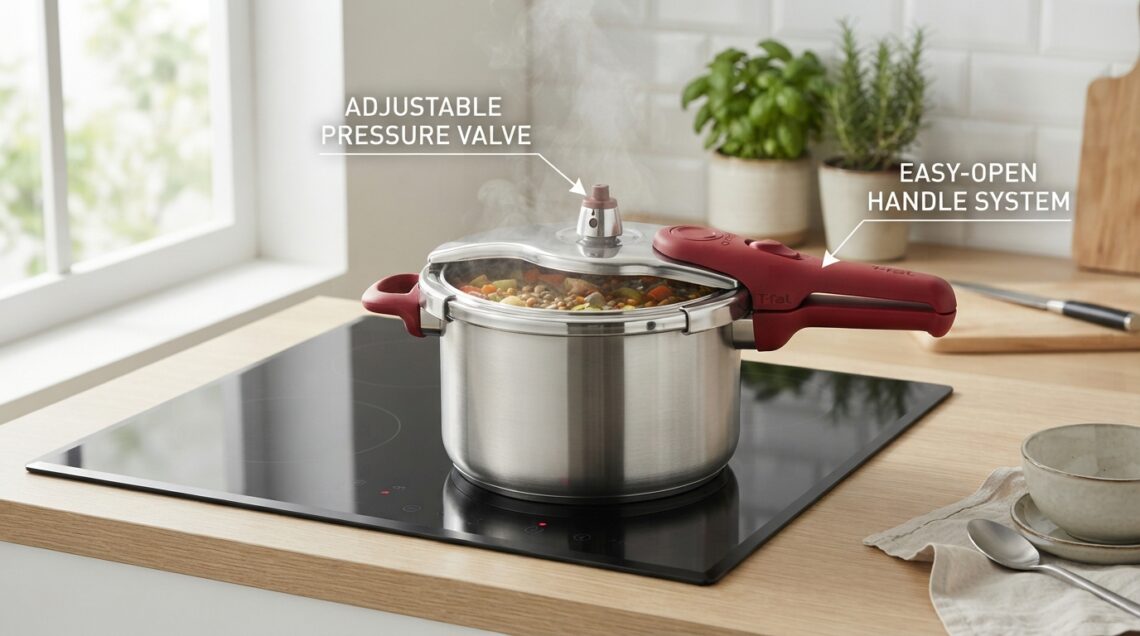
The T-fal Clipso Stainless Steel Pressure Cooker, in its 6.3-quart size, is one example of this more modern approach to stovetop pressure cooking. It combines a stainless steel body with features like an easy-open lid, a secure locking system, and an adjustable pressure valve, along with induction compatibility and an included recipe book and steam basket. This article takes a closer look at what the cooker offers, how it can be used in everyday cooking, and what’s worth thinking about before deciding whether it fits your kitchen.
What Is the T-fal Clipso Stainless Steel Pressure Cooker?
This is a stovetop pressure cooker, meaning it relies on an external heat source, such as a gas, electric, or induction burner, rather than its own internal electric heating element. It’s built from stainless steel and sized at 6.3 quarts, placing it in a fairly common capacity range for household pressure cookers designed to handle family-sized meals without becoming too large or heavy to manage comfortably.
The “Clipso” name refers to T-fal’s particular lid design, which is centered around a clip-style locking and opening mechanism intended to simplify the process of sealing and unsealing the pot compared to older twist-lock or screw-type lids found on some traditional pressure cookers. Alongside the cooker itself, this product typically includes a steam basket and a recipe book, giving new users a starting point for exploring different pressure cooking techniques.
Key Features
Stainless Steel Construction
The body of this pressure cooker is made from stainless steel, a material commonly chosen for cookware because it resists reacting with acidic ingredients, holds up well under repeated exposure to heat, and is relatively easy to clean compared to some other metals. Stainless steel also tends to have a long usable lifespan when properly cared for, which is a meaningful consideration for an appliance that may see frequent use over many years.
Easy-Open Lid with Clip-Style Mechanism
One of the more distinctive design elements of this cooker is its clip-style lid system, which is intended to make opening and closing the pot more straightforward compared to some traditional pressure cooker designs that require aligning and twisting the lid into place. This kind of mechanism can be particularly appreciated by those who are new to pressure cooking and want a more intuitive locking process.
Secure Locking System
Safety in pressure cooking depends heavily on the lid remaining securely sealed while pressure builds and while the pot is actively cooking. This model includes a locking system designed to prevent the lid from being opened while there is still pressure inside, which is a standard and important safety feature across modern pressure cookers.
Adjustable Pressure Valve
Rather than offering just a single fixed pressure setting, this cooker includes an adjustable pressure valve, allowing for some flexibility in how intensely the pot builds and maintains pressure. This can be useful for adapting to different types of recipes, since some ingredients benefit from gentler pressure cooking while others are better suited to higher, more intense settings.
Induction Compatibility
Because the base is designed to work with induction cooktops in addition to gas and standard electric stovetops, this cooker offers some flexibility for households with different kitchen setups, or for those who may switch stovetop types in the future without needing to replace their cookware.
Included Steam Basket
A steam basket is included with this cooker, which extends its usefulness beyond just pressure cooking liquids and stews. It allows for steaming vegetables, dumplings, or other foods gently, using the pot’s sealed environment without submerging the food directly in liquid.
Included Recipe Book
For those newer to pressure cooking, an included recipe book offers a starting point for understanding cooking times, ingredient ratios, and technique, which can help reduce some of the initial guesswork that often comes with learning a new kitchen appliance.
6.3-Quart Capacity
This size is well suited to preparing meals for a family or for batch cooking that yields leftovers, while still remaining a manageable size for most home kitchens in terms of storage and stovetop footprint.
How It Can Be Used
A pressure cooker like this one tends to be a fairly versatile addition to a kitchen, especially for people who cook a variety of dishes throughout the week.
Beans, Lentils, and Legumes Dried beans and lentils are among the most commonly cited uses for pressure cookers, since the sealed, high-heat environment can significantly reduce cooking time compared to simmering them in an open pot on the stove.
Soups and Stews Because pressure cooking traps steam and heat, it’s often used to build deep, well-developed flavor in soups and stews more quickly than traditional slow simmering methods would typically allow.
Tougher Cuts of Meat Cuts like chuck roast, short ribs, or brisket, which usually require long cooking times to become tender, can often be prepared more quickly under pressure while still achieving a similarly tender result.
Steamed Vegetables and Dumplings With the included steam basket, this cooker can also be used for steaming, offering an alternative cooking method within the same pot rather than requiring a separate steamer.
Grains Rice and other grains can be cooked using this pressure cooker as well, though getting the timing and liquid ratios right often benefits from following a specific recipe or reference chart, at least until you become familiar with how your particular cooker performs.
Batch Cooking Given its 6.3-quart capacity, this cooker is a reasonable option for preparing larger quantities of food at once, whether that’s a big pot of chili, a family-sized soup, or bulk-cooked grains and legumes meant to be portioned out over several days.
Who It May Be Suitable For
This type of stovetop pressure cooker tends to suit a fairly broad range of home cooks, though some households are likely to get more consistent use out of it than others.
People new to pressure cooking who want a more approachable entry point. The clip-style lid design and included recipe book are aimed at making the learning curve a bit gentler for those who haven’t used a pressure cooker before.
Households with induction cooktops. Because the cooker is compatible with induction surfaces in addition to gas and standard electric stovetops, it offers more flexibility for kitchens that have moved toward induction cooking or may do so in the future.
Cooks who value stovetop control over electric automation. For those who prefer adjusting heat manually and staying more directly involved in the cooking process, a stovetop pressure cooker like this one can feel more hands-on than an electric multi-cooker.
Families or those who batch cook regularly. The 6.3-quart capacity is well suited to preparing meals for multiple people or cooking in bulk for leftovers throughout the week.
Cooks interested in steaming as well as pressure cooking. The included steam basket adds some versatility for those who want more than one cooking method available in a single pot.
This cooker may be less essential for someone who already owns a stovetop pressure cooker they’re satisfied with, or for those who specifically want programmable, hands-off cooking, which tends to be more associated with electric pressure cookers and multi-cookers.
Important Things to Consider
Before deciding whether this particular cooker fits your kitchen, there are a few practical points worth thinking through.
Learning Pressure Cooking Basics Even with a more approachable lid design, stovetop pressure cooking still requires understanding some fundamentals, such as recognizing when the pot has reached full pressure, adjusting stovetop heat to maintain that pressure, and understanding the difference between natural and quick pressure release methods.
Manual Heat Monitoring Since this is a stovetop rather than an electric model, maintaining consistent pressure depends on monitoring and adjusting the burner throughout the cooking process, which requires a bit more attention than an electric cooker that regulates its own heat automatically.
Confirming Cooktop Compatibility While this cooker is designed to work with induction, gas, and standard electric cooktops, it’s worth double-checking current product specifications to confirm compatibility with your specific stovetop model, especially if you have a less common cooktop type.
Understanding the Adjustable Pressure Valve Having an adjustable pressure setting adds flexibility, but it also means taking the time to understand which setting is appropriate for which type of recipe, rather than relying on a single fixed pressure level for everything.
Maintenance of the Sealing Gasket and Valve As with most pressure cookers, components like the sealing gasket and pressure valve may need periodic inspection and occasional replacement over time to maintain a proper seal and ensure safe operation.
Reading the Manual Thoroughly Pressure cooking involves trapped steam and heat, so taking time to read through the included instructions is worthwhile, even for those with prior pressure cooking experience, since specific operating procedures can vary between models and manufacturers.
Storage and Weight A stainless steel pressure cooker of this capacity has a reasonable amount of heft, particularly once filled with food. This is generally a fair trade-off for durability, but it’s worth factoring in if you have limited storage space or specific considerations around lifting heavier cookware.
Comparing General Categories of Pressure Cookers
To put this cooker into context, it can help to compare it against the broader categories of pressure cookers available today, without singling out any specific competing brand or product.
Stovetop Pressure Cookers with Modern Lid Designs (like the T-fal Clipso) These combine the traditional benefits of stovetop pressure cooking, such as fast pressure buildup and direct heat control, with newer conveniences like simplified locking mechanisms. This can make them more approachable for newer users while still appealing to those who prefer manual, hands-on cooking.
Traditional Stovetop Pressure Cookers Older-style stovetop models often rely on twist-lock or screw-type lids, which can require more practice to align and seal properly. They tend to be simple and durable but may have a steeper initial learning curve for first-time users.
Electric Pressure Cookers and Multi-Cookers These regulate heat and pressure automatically through digital controls, often with additional functions like slow cooking or sautéing built in. They tend to be more hands-off during operation, but they rely on electronic components and require dedicated counter space and a power outlet.
Choosing Between These Categories The right choice largely comes down to personal comfort with stovetop cooking versus digital automation, along with how much you value direct control over heat and pressure levels. Someone drawn to hands-on cooking with a gentler learning curve might find a modern stovetop design like this one appealing, while someone who prioritizes programmable convenience might lean toward an electric multi-cooker instead.
Frequently Asked Questions
Does this cooker work on all stovetop types? It’s designed to be compatible with gas, standard electric, and induction cooktops, though it’s a good idea to confirm compatibility with your specific stovetop by checking the current product specifications before purchasing.
What is included with this pressure cooker? This product typically includes the pressure cooker itself, a steam basket for steaming foods, and a recipe book to help guide new users through common pressure cooking techniques.
How does the “Clipso” lid differ from a traditional pressure cooker lid? The Clipso design uses a clip-style mechanism intended to simplify opening and closing the lid, compared to some traditional pressure cookers that require twisting or aligning the lid in a specific way to lock it into place.
Can the pressure level be adjusted for different recipes? Yes, this cooker includes an adjustable pressure valve, allowing for some flexibility depending on the type of food being cooked and the specific recipe being followed.
Is it necessary to soak beans before pressure cooking them? This can depend on the type of bean and personal preference, as well as the specific recipe being used. Soaking is often recommended to help reduce cooking time and improve texture, though many pressure cooker recipes do account for cooking beans without soaking as well.
How is the cooker cleaned after use? Stainless steel pressure cookers are generally cleaned similarly to other stainless steel cookware, though it’s worth reviewing the manufacturer’s specific care instructions regarding the lid, gasket, and pressure valve, since these components sometimes have particular cleaning recommendations.
Conclusion
The T-fal Clipso Stainless Steel Pressure Cooker, in its 6.3-quart size, brings together traditional stovetop pressure cooking with some more modern conveniences, including a clip-style lid mechanism, an adjustable pressure valve, and induction compatibility. Paired with an included steam basket and recipe book, it’s designed to offer a reasonably approachable entry point for those newer to pressure cooking, while still appealing to more experienced cooks who prefer stovetop control over electric automation.
As with any pressure cooker, taking the time to read through the included instructions, understand the locking and pressure release mechanisms, and confirm compatibility with your specific stovetop will help ensure a smoother and safer cooking experience.