Introduction
Not every household needs a large pressure cooker. For people cooking mainly for one or two, or for anyone looking for a smaller, lighter appliance that’s easy to store and quick to bring out on a weeknight, a compact pressure cooker can sometimes be a more practical fit than a larger family-sized model. Smaller pressure cookers also tend to appeal to people who want to try pressure cooking for the first time without committing to a bulkier, heavier piece of cookware.
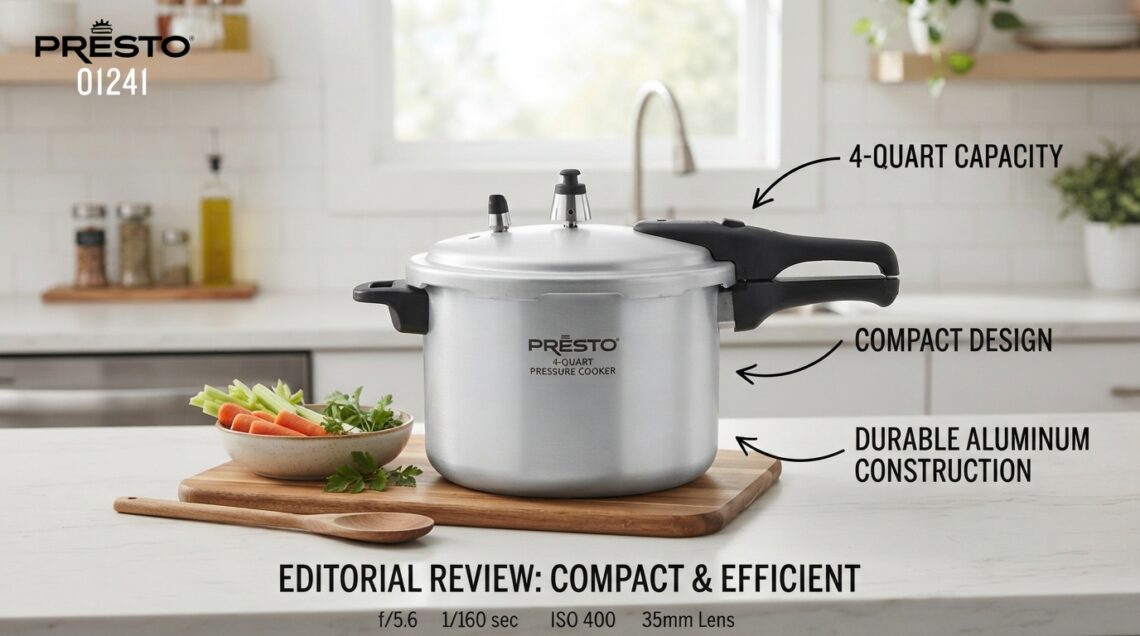
The Presto 01241 4-Quart Aluminum Pressure Cooker is one option in this smaller capacity range. Built from aluminum rather than stainless steel, and sized at four quarts, it represents a more compact, lighter-weight approach to stovetop pressure cooking. This article looks at what this cooker offers, how aluminum construction compares to other common materials, the kinds of cooking tasks it tends to suit, and what’s worth considering before adding one to your kitchen.
What Is the Presto 01241 4-Quart Aluminum Pressure Cooker?
This is a stovetop pressure cooker, meaning it depends on an external heat source, typically a gas or electric burner, rather than an internal electric heating element. It’s constructed from aluminum, which is a lighter and generally more affordable material compared to stainless steel, and it holds four quarts, making it one of the smaller pressure cooker sizes commonly available for home use.
Presto has been a longstanding manufacturer of pressure cookers, and the 01241 model reflects a fairly classic, straightforward design: a simple pressure regulator, a manageable size suited to smaller households or side dishes, and construction intended to distribute heat efficiently across the base of the pot.
Key Features
Aluminum Construction
The body of this cooker is made from aluminum, a material valued in cookware for its light weight and efficient heat conduction. Aluminum tends to heat up and respond to temperature changes more quickly than heavier materials like stainless steel, which can be useful for pressure cooking, where reaching and maintaining consistent pressure depends on how evenly and responsively the pot handles heat.
4-Quart Capacity
At four quarts, this is a notably smaller pressure cooker compared to six-quart or larger family-sized models. This size tends to suit smaller households, individuals, or couples, as well as those looking to prepare side dishes, smaller batches of grains or vegetables, or modest portions of soups and stews rather than large-scale batch cooking.
Weighted Pressure Regulator
Like many traditional stovetop pressure cookers, this model uses a weighted pressure regulator, sometimes referred to as a jiggle valve, that sits atop the vent pipe. As steam builds inside the pot, it escapes through this regulator, creating the familiar rocking motion and sound associated with classic stovetop pressure cookers. This is a mechanically simple design with relatively few components, which some cooks appreciate for its straightforwardness.
Compact and Lightweight Design
Between its aluminum construction and smaller four-quart capacity, this cooker is notably lighter and more compact than larger stainless steel models. This can make it easier to lift, maneuver, and store, particularly for those with limited cabinet space or anyone who prefers a lighter piece of cookware to handle regularly.
Compatibility with Standard Stovetops
As a stovetop pressure cooker, this model is generally suited to gas and standard electric stovetops. Because aluminum is not always compatible with induction cooktops without an added magnetic base layer, it’s worth checking current product specifications if you specifically have an induction range.
Simple, Manual Operation
There are no digital displays or programmable settings involved in this cooker’s operation. Cooking is managed entirely through stovetop heat control and the pressure regulator, which appeals to those who prefer a more traditional, hands-on approach to pressure cooking without additional electronic components to learn or troubleshoot.
How It Can Be Used
A smaller pressure cooker like this one can still be quite versatile, particularly for individuals, couples, or anyone looking to prepare smaller portions or side dishes efficiently.
Side Dishes and Smaller Portions Given its four-quart size, this cooker is well suited to preparing side dishes, such as a modest batch of rice, beans, or steamed vegetables, without the need for a larger pot that might otherwise go partially empty.
Cooking for One or Two People For individuals or couples, a smaller pressure cooker can be a practical way to prepare full meals, like a modest pot of soup, stew, or beans, without ending up with more leftovers than needed.
Quick Weeknight Meals Because aluminum heats up quickly, this cooker can be useful for weeknight meals where reaching pressure faster helps shave a bit of extra time off the overall cooking process.
Beans and Legumes in Smaller Batches Dried beans and lentils remain one of the most common uses for pressure cookers generally, and a four-quart model is well suited to preparing smaller batches without needing to scale a recipe up to fill a larger pot.
Grains Rice and other grains can also be prepared using this cooker, though as with most pressure cookers, getting the timing and liquid ratios right often benefits from following a specific recipe or reference chart until you become familiar with how the pot performs.
A Secondary Pressure Cooker for Smaller Jobs Some households that already own a larger pressure cooker choose to keep a smaller model like this one on hand specifically for smaller side dishes or single-serving portions, rather than using a large pot for a small amount of food.
Who It May Be Suitable For
This smaller aluminum pressure cooker tends to suit a somewhat different range of home cooks compared to larger, stainless steel models.
Individuals or couples cooking smaller portions. The four-quart capacity is well matched to smaller households that don’t need to prepare large batches at once.
Those looking for a lightweight, easy-to-handle cooker. Aluminum construction combined with a smaller size makes this cooker noticeably lighter than larger stainless steel alternatives, which can be appreciated by anyone who prefers easier lifting and handling.
People new to pressure cooking who want to start with a smaller, more affordable option. A compact pressure cooker can serve as a lower-commitment way to explore pressure cooking techniques before deciding whether to invest in a larger model.
Cooks looking for a secondary, smaller pressure cooker. Households that already own a larger pressure cooker sometimes add a smaller model specifically for side dishes or smaller portions.
Those with limited kitchen storage space. The compact size and lighter weight of this cooker can make it easier to store in smaller kitchens or in cabinets with limited room.
This cooker may be less suited to larger families or those who frequently batch cook in bulk, since its four-quart capacity is on the smaller end of what’s typically available, and repeatedly cooking in multiple batches to accommodate a larger household could offset some of the time-saving benefits pressure cooking is meant to offer.
Important Things to Consider
Before deciding whether this particular cooker is right for you, there are a few practical points worth thinking through.
Aluminum vs. Stainless Steel Aluminum and stainless steel each come with their own trade-offs. Aluminum is lighter and conducts heat more efficiently, but it can be more reactive with certain acidic ingredients over time and is sometimes considered less durable than stainless steel in terms of resisting dents or warping with heavy use. Stainless steel, by contrast, tends to be heavier and slower to heat but is generally more resistant to reactivity and wear.
Capacity Limitations Because this cooker holds four quarts, it may not be suitable for recipes that call for larger quantities or for households that regularly cook for more than two or three people. It’s worth thinking honestly about your typical batch sizes before choosing a smaller capacity cooker.
Induction Cooktop Compatibility Aluminum cookware is not always induction-compatible unless it includes a magnetic base layer. If you have an induction stovetop, it’s important to check current product specifications to confirm whether this specific model will work on your cooktop.
Manual Heat Monitoring As with any stovetop pressure cooker, maintaining consistent pressure depends on actively monitoring and adjusting the burner throughout the cooking process, which requires more hands-on attention than an electric pressure cooker that regulates its own heat.
Understanding Pressure Release Methods Recipes for stovetop pressure cookers often specify either a natural pressure release, where the pot depressurizes on its own, or a quick release, involving manual venting of steam. Understanding both methods and applying them safely is an important part of using any pressure cooker.
Maintenance of the Sealing Gasket and Regulator Like most pressure cookers, this model includes components such as a sealing gasket that may need occasional inspection and eventual replacement to maintain a proper seal over years of use.
Reading the Manual Thoroughly Because pressure cooking involves trapped steam and heat, taking time to read through the included instructions is worthwhile, even for those who have used other pressure cookers before, since specific operating details can vary between models.
Comparing General Categories of Pressure Cookers
To put this cooker into context, it can help to compare it against some broader categories within the pressure cooker market, without singling out any specific competing brand or product.
Smaller Aluminum Pressure Cookers (like the Presto 01241) These tend to be lighter, more affordable, and quicker to heat, making them well suited to smaller households, side dishes, or anyone looking for an accessible entry point into pressure cooking. The trade-off is a smaller capacity and, in some cases, less durability over very long-term heavy use compared to stainless steel.
Larger Stainless Steel Pressure Cookers These generally offer greater capacity for family-sized meals or batch cooking, along with a material that tends to resist reactivity and wear over time, though they’re typically heavier and can take a bit longer to heat due to the properties of stainless steel.
Electric Pressure Cookers and Multi-Cookers These regulate pressure and temperature automatically through digital controls, often including additional functions like slow cooking or sautéing, and tend to be more hands-off during operation, though they require dedicated counter space, a power outlet, and reliance on electronic components.
Choosing Between These Categories The right choice often comes down to household size, storage space, and how much you value lighter weight and quicker heating versus larger capacity and long-term material durability. Someone cooking primarily for one or two people, or looking for a lower-cost, lightweight entry point into pressure cooking, may find a smaller aluminum model like this one to be a practical fit, while larger households or those planning to batch cook regularly might lean toward a bigger, stainless steel option instead.
Frequently Asked Questions
Is aluminum safe to use for pressure cooking? Aluminum cookware has been used in kitchens for many decades and is generally considered safe for cooking, though some cooks prefer to avoid prolonged contact with highly acidic ingredients in aluminum pots, as acidity can interact with the metal over time. Following the manufacturer’s care instructions can help address any specific concerns.
Can this cooker be used on an induction stovetop? Aluminum cookware is not always compatible with induction cooktops unless it includes a magnetic base layer. It’s a good idea to check the current product specifications to confirm compatibility with your specific stovetop before purchasing.
Is four quarts enough to cook a full meal? For individuals, couples, or smaller portions, four quarts is often sufficient to prepare a complete meal, such as a pot of soup, beans, or grains. For larger households or bigger batch cooking, a larger capacity cooker may be more practical.
How does this cooker compare in weight to a stainless steel model? Aluminum is generally lighter than stainless steel, and combined with its smaller four-quart size, this cooker tends to be noticeably lighter and easier to handle than larger stainless steel pressure cookers.
Does this cooker require any special utensils? In most cases, standard kitchen utensils are suitable for use with a pressure cooker like this one, though reviewing the included instructions can clarify whether any specific accessories are recommended for particular recipes or functions.
How is it cleaned after use? Aluminum cookware is typically cleaned using gentle, non-abrasive methods to help preserve its surface over time. It’s worth checking the manufacturer’s specific care instructions regarding the lid, gasket, and pressure regulator as well, since these components sometimes have particular cleaning recommendations.
Conclusion
The Presto 01241 4-Quart Aluminum Pressure Cooker offers a smaller, lighter-weight take on traditional stovetop pressure cooking. Its aluminum construction makes it quicker to heat and easier to handle compared to larger stainless steel models, while its four-quart capacity suits smaller households, side dishes, and those looking for a lower-commitment way to explore pressure cooking.
As with any pressure cooker, thinking through your household’s typical cooking needs, your stovetop compatibility, and your comfort level with manual pressure regulation can help clarify whether this particular size and material combination is the right fit for your kitchen.