Introduction
For a lot of home cooks, the appeal of a multicooker comes down to a simple idea: fewer appliances, less counter clutter, and the ability to cook a wide range of dishes using one pot instead of several. The Instant Pot Duo 7-in-1 is one of the longer-standing entries in this category, known for combining several common cooking methods — pressure cooking chief among them — into a single stainless steel unit at a relatively accessible price point within the broader multicooker lineup.
This article walks through what the Duo 7-in-1 actually offers: how it’s built, what each of its functions does, the kinds of dishes it tends to handle well, and the practical details worth thinking about before it becomes part of a kitchen. Instead of offering a final verdict, the goal is to lay out the specifics clearly enough that you can decide for yourself whether it matches how you cook.
A Quick Overview
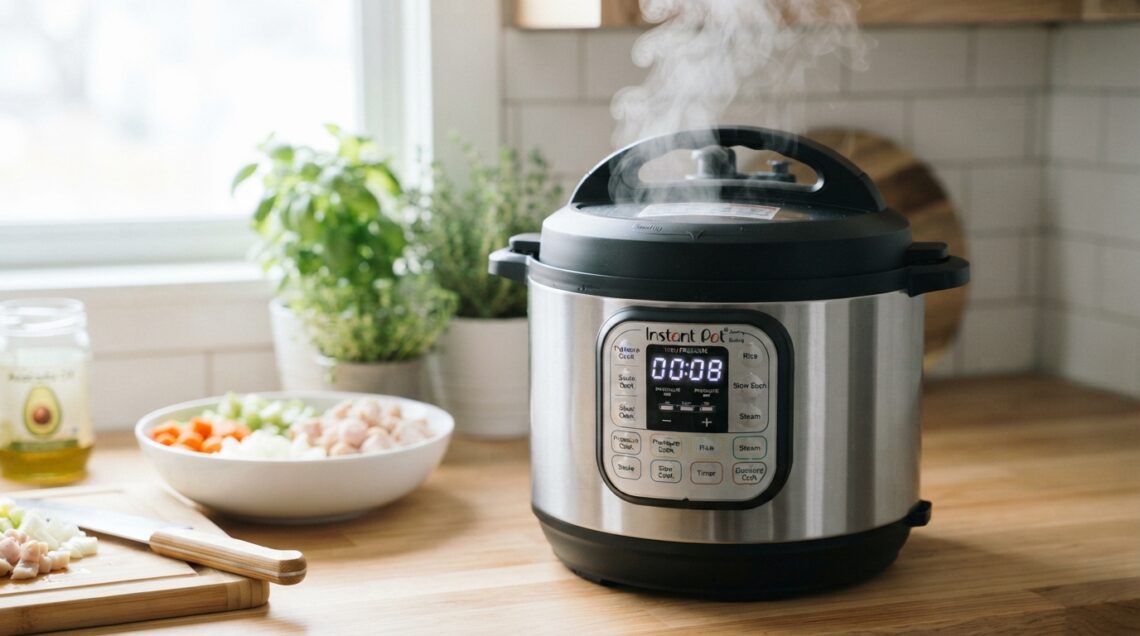
The Duo 7-in-1 is part of Instant Pot’s original Duo family, generally considered the brand’s foundational multicooker line. It’s built around a stainless steel inner pot, a lid that locks and seals for pressure cooking, and an electronic control panel with a set of preset cooking programs, all housed in a finger-print resistant stainless steel exterior.
The 6-quart version covered here is generally sized for about six servings, which tends to suit small to mid-sized households, meal prepping, or cooking for guests without needing a significantly larger unit. Instant Pot also offers this model in other sizes, but 6 quarts tends to be the most commonly chosen size for typical households.
Key Features
Seven Cooking Functions in One Appliance
The Duo is marketed as a 7-in-1 device, combining pressure cooking, slow cooking, rice cooking, steaming, sautéing, yogurt making, and warming into a single unit. Some versions and listings of this model also reference sterilizing capability using sustained heat. Rather than needing a separate appliance for each of these tasks, the Duo handles them through different program settings using the same base unit and inner pot.
Smart Program Presets
The Duo includes a set of one-touch Smart Programs — generally around 13 to 14, depending on the specific version — covering dishes like soup, meat and stew, beans and chili, poultry, rice, multigrain, porridge, and yogurt, among others. Each preset applies a pre-configured combination of pressure, temperature, and time suited to that type of food, intended to reduce the need to calculate settings manually for common recipes.
Stainless Steel Inner Pot with Tri-Ply Bottom
The inner cooking pot is made from food-grade 18/8 stainless steel with a tri-ply bottom, a layered construction intended to distribute heat more evenly, which is particularly relevant for the sauté function, where uneven heat can lead to scorching or inconsistent browning.
Manual Steam Release Valve
Unlike some newer models in the broader Instant Pot lineup, the Duo 7-in-1 generally uses a more traditional, manual steam release valve positioned on top of the lid, which the user pushes or turns by hand to vent pressure once cooking finishes. This is a more hands-on approach compared to the remote steam-release switches found on some other models.
Basic Digital Timer Display
The Duo’s display generally shows a straightforward digital countdown timer, without the more detailed stage-by-stage progress indicators — such as separate readouts for preheating, active cooking, and keep-warm phases — found on some higher-tier models in the broader Instant Pot range.
Ten-Plus Safety Mechanisms
The Duo includes more than ten built-in safety features, such as overheat protection and a lid-locking mechanism that prevents the lid from being opened while the pot is still pressurized, aimed at reducing common risks associated with pressure cooking.
Programmable Delay Timer
A delay-start timer, generally up to 24 hours, allows ingredients to be added to the pot in advance and the cooking cycle scheduled to begin later, which can be useful for having a dish ready at a specific time without needing to start it manually at that exact moment.
Companion App with Recipes
The Duo pairs with a free companion app (for iOS and Android) offering several hundred recipes, generally organized by cooking function or dish type, aimed at helping new users explore what the appliance can do beyond its built-in presets.
Dishwasher-Safe Components
The lid, inner pot, and included accessories are generally dishwasher-safe, while the stainless steel exterior housing should be wiped down separately rather than submerged.
Included Steam Rack
The Duo typically includes a stainless steel steaming rack, used for steaming vegetables, eggs, or other foods above the base of liquid in the pot without submerging them directly.
How It Can Be Used
Because the Duo combines several distinct cooking methods, its everyday use tends to span a fairly wide range of dishes. The pressure cook function is generally used for foods that benefit from faster cooking under pressure — dried beans, tougher cuts of meat, stews, and grains that would otherwise take considerably longer using conventional stovetop methods. Because pressure cooking raises the boiling point of liquid inside the sealed pot, cook times for many dishes can be meaningfully shorter than standard methods.
The slow cook function is suited to dishes that benefit from extended, low-temperature cooking, such as pulled pork, chili, or soups that develop flavor gradually over several hours. Having both fast pressure cooking and slow cooking available in the same appliance gives some flexibility depending on the day — a rushed weeknight might call for pressure cooking, while a slower Sunday might be better suited to the slow cook setting.
The sauté function allows browning meat or softening vegetables directly in the same pot before switching to pressure cooking or slow cooking, which reduces the number of dishes used for a single recipe compared to searing in a separate pan and transferring everything to the pot afterward. A common example is browning chicken using sauté, then adding rice, broth, and seasoning before switching to pressure cook — completing what would otherwise be a multi-pan meal using just one vessel.
Beyond savory cooking, the Duo’s rice function applies settings tuned to grains, the steam function (paired with the included rack) handles vegetables, eggs, or seafood using a sealed but not fully pressurized setting, and the yogurt function maintains a lower, consistent temperature over an extended period suited to fermentation. The warm function holds finished food at a safe serving temperature after the main cooking cycle completes, which is useful for staggered mealtimes or when a dish finishes before everyone is ready to eat.
For many households, the practical value of the Duo comes less from using every single function regularly, and more from not needing a separate rice cooker, slow cooker, and yogurt maker taking up space for each of those individual tasks — reaching for whichever program suits a given meal rather than committing counter and cabinet space to several single-purpose appliances.
Who It May Be Suitable For
First-time multicooker or pressure cooker buyers. Because it represents Instant Pot’s original, longer-established Duo design, the 7-in-1 tends to be a common entry point for people trying pressure cooking for the first time, generally at a more accessible price point relative to some of the brand’s newer, more feature-heavy models.
Households looking to consolidate multiple kitchen appliances. Combining pressure cooking, slow cooking, rice cooking, steaming, sautéing, and yogurt making into one unit tends to appeal to people trying to reduce the number of separate single-purpose appliances taking up space.
People who want faster weeknight meals. The pressure cook function’s ability to meaningfully cut cooking time for dishes like beans, stews, and tougher cuts of meat suits households balancing cooking with limited time.
Meal preppers and batch cooks. With a 6-quart capacity generally suited to around six servings, the Duo works well for people preparing larger batches of grains, beans, or braised dishes to portion out across the week.
Cooks comfortable with a more manual, hands-on process. Because the Duo relies on a manual steam release valve and a more basic timer display rather than a remote release switch or detailed stage-by-stage progress indicators, it tends to suit people who don’t mind a slightly more hands-on approach to venting steam and tracking cooking stages.
Important Things to Consider
Manual steam release requires some care. The steam release valve on this model is generally operated by hand, which means positioning your hand near the vent to release pressure once cooking finishes. Using a long-handled utensil to push or turn the valve, and keeping hands and face away from the steam plume, is a commonly recommended precaution.
Basic display information. Compared to some other models with detailed stage indicators, the Duo’s display generally shows a simpler countdown timer, so it may not always clearly indicate whether the pot is currently building pressure, actively cooking, or holding at keep-warm, especially before pressure has fully built.
Not rated for pressure canning. Like most electric multicookers, the Duo is not designed or certified for pressure canning low-acid foods, since it doesn’t maintain the exact, sustained pressure levels required for safe home canning. A dedicated stovetop pressure canner is needed for that specific task.
Sealing ring odor retention. The silicone sealing ring inside the lid can gradually absorb odors from strongly flavored, savory dishes over time. Some owners keep a separate sealing ring dedicated to more neutral or sweet foods, like yogurt or desserts, to avoid cross-flavor transfer.
Cleaning can take a bit more effort than expected. While the lid, inner pot, and accessories are generally dishwasher-safe, some parts — particularly the lid’s various components and gasket area — can require more thorough attention to fully clean and keep free of lingering food odors.
Learning curve for pressure cooking fundamentals. Even with guided presets, understanding concepts like proper liquid quantities, natural versus manual pressure release, and adjusting cook times for different ingredients generally takes some hands-on practice for anyone newer to pressure cooking.
Counter space and lid clearance. As with most pressure cookers of this design, some clearance above and around the unit is needed for the lid to open fully and for steam to vent safely, which is worth factoring in when deciding where it will live on the counter.
Warranty coverage. Multicookers in this category are generally sold with a limited warranty period, and it’s worth confirming current terms directly with the retailer or manufacturer at the time of purchase, since coverage details can vary.
Comparison of General Categories
Rather than comparing specific competing brands, it helps to understand where the Duo 7-in-1 fits among the broader categories of cooking appliances:
Single-function appliances — a dedicated slow cooker, rice cooker, or stovetop pressure cooker, for example — are generally optimized around one specific cooking method. These can offer more refined performance for that particular task but require separate appliances, storage, and cleanup for each additional cooking style used.
Entry-level multi-function electric pressure cookers — the category the Duo 7-in-1 belongs to — combine pressure cooking with several other common methods in a single unit at a relatively accessible price point, generally using more manual controls like a hand-operated steam release valve rather than fully automated venting.
Higher-tier multi-function pressure cookers build on the same core concept but generally add refinements like automated or remote steam release switches, more detailed stage-by-stage displays, additional cooking modes such as sous vide, and sometimes upgraded sealing mechanisms, typically at a higher price point.
Multi-function cookers with added air-frying capability extend the concept further by including an air fryer lid or basket alongside standard pressure-cooking functions, offering additional versatility for crisping and roasting, generally at a higher price point and larger overall footprint.
Where a specific household lands among these categories generally comes down to budget, how much manual involvement is acceptable in the cooking process, and whether additional refinements like automated steam release or more detailed displays are worth the added cost.
Frequently Asked Questions
Is the manual steam release valve difficult or unsafe to use? It requires some care, since it’s operated by hand near the top of the unit, but it’s a long-standing, well-understood design used across many pressure cookers. Using a utensil to operate the valve and keeping hands and face away from the steam plume are commonly recommended precautions.
Can this model be used for pressure canning? No. Like most electric multicookers, the Duo is not certified or designed for pressure canning low-acid foods, since it can’t maintain the specific, consistent pressure levels that safe home canning requires. A dedicated stovetop pressure canner is needed for that task.
How many people can the 6-quart size feed? It’s generally described as suited to about six servings, making it a reasonable choice for small to mid-sized households, batch cooking, or meal prepping for a few days at a time.
Are the lid and inner pot dishwasher-safe? Yes, the lid, inner pot, and included accessories are generally dishwasher-safe, though some components around the lid and sealing ring area may benefit from more thorough hand-cleaning to fully remove lingering odors.
Does it come with recipes? Yes, it pairs with a free companion app offering several hundred recipes, generally organized by cooking function or dish type, in addition to the built-in Smart Program presets on the unit itself.
How does this compare to Instant Pot’s Duo Plus model? The Duo 7-in-1 generally represents a more basic, original version within the broader Duo lineup, typically using a manual steam release valve and a simpler timer display, while models like the Duo Plus generally add refinements such as an automatic-sealing lid design and a more detailed progress display, often at a somewhat higher price point.
Can it replace a dedicated slow cooker? It includes a slow cook function that can handle many of the same dishes as a standalone slow cooker, though some users note the results can differ somewhat from a traditional ceramic slow cooker insert due to differences in pot material and heat distribution.
Conclusion
The Instant Pot Duo 7-in-1 represents a foundational, well-established option within the broader multicooker category: a stainless steel unit combining pressure cooking, slow cooking, sautéing, steaming, rice cooking, yogurt making, and warming, generally at a more accessible price point within Instant Pot’s wider lineup. Its appeal tends to come from consolidating several common cooking methods into a single appliance, backed by guided presets and a companion recipe app, while relying on a more traditional, hands-on approach to steam release and display information compared to some higher-tier models.
Whether this particular appliance fits a given kitchen depends largely on how many different cooking methods get used regularly, how comfortable you are with a manual steam release valve and a more basic display, and how much value you place on consolidating multiple appliances into one at a relatively accessible price point. For households looking for an approachable entry into pressure cooking, or wanting to simplify their kitchen appliance lineup without paying for additional automated refinements, this category of multicooker tends to be a practical fit; for those who prioritize automated steam release or more detailed cooking-stage displays, it may be worth comparing against higher-tier models in the same lineup as well.